# What is a Service?
Access from anywhere – at any time – over the global connected Internet infrastructure is the purported goal of [global cloud computing](https://hub.subspace.services/books/your-personal-cloud/page/what-is-the-cloud "What is the Cloud?"). Through the cloud, anyone can access data stored on remote servers no matter where they are in the globe. With an internet connection, you can use software installed on someone else's computer system without needing to maintain hardware or setup software yourself.
## Business By Proxy
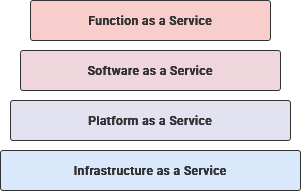
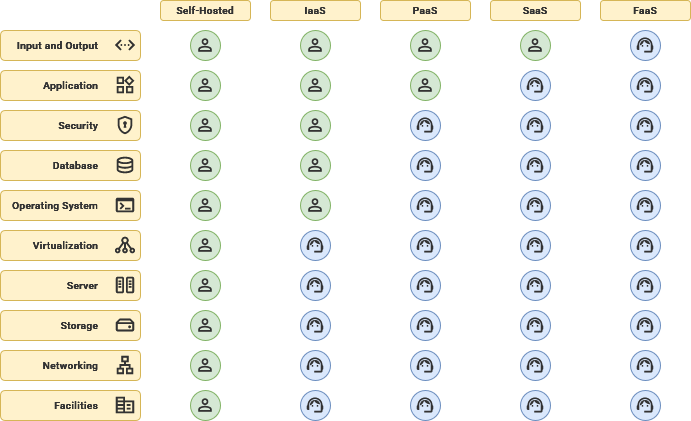
For corporations, a service might be considered many different things and falls along a spectrum. On one end, this may be "[bare metal](https://en.m.wikipedia.org/wiki/Bare_machine)" hardware infrastructure or a Docker instance that is rented per month. On the other, a company may subscribe to web-based software or discrete functions that are pay-per-use.
This business model is commonly referred to as "[Anything as a Service](https://en.m.wikipedia.org/wiki/As_a_service)" where, instead of owning a product outright, a service provider licenses access to a maintained environment for a lump sum or subscription fee. These services are fully accessible over the internet and do not require businesses to have physical access to hardware systems they maintain themselves.
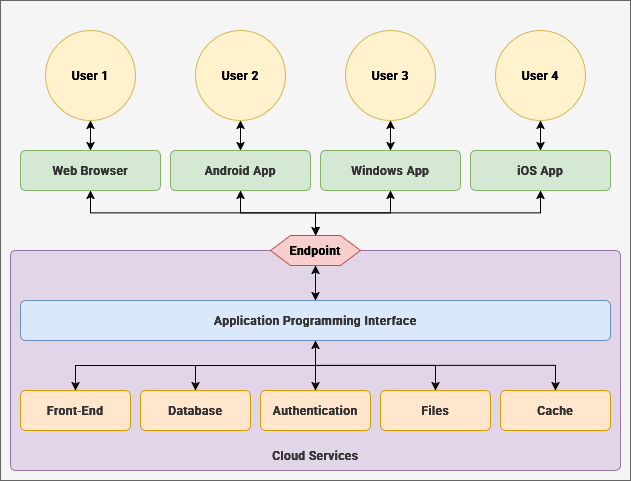
Many cloud services are built on top of an [API](https://en.m.wikipedia.org/wiki/API) (Application Programming Interface) – or established specifications that allow multiple services to communicate with each other through a common language. Through an API, clients and servers alike can request and receive information from a central location.
In practice, this allows consumers to uniformly access services like [Proton Mail](https://proton.me/mail) through numerous, isolated experiences – like their website, mobile apps, and desktop software. Functionally, this also means there is only one true version of the software available – the software API server. Even though the mobile and desktop software have different version numbers, they all connect to the central API server under the control of the software provider.
## Digital Autonomy
By 2025, this business model has extended from technology conglomerates to an estimated 96% of corporations with over 60% of all corporate data stored in the cloud. By proxy, these cloud services have taken over most of the consumer-connected World Wide Web. It is [quite literally impossible to avoid them](https://gizmodo.com/i-cut-the-big-five-tech-giants-from-my-life-it-was-hel-1831304194).
The Cloud is used to invisibly control the flow of consumer data between "[front-end](https://en.m.wikipedia.org/wiki/Frontend_and_backend)" clients – such as the Google Drive website or the Pages app for iOS – and the provider's labyrinthian "[back-end](https://en.m.wikipedia.org/wiki/Frontend_and_backend)" of interconnected networks and systems located around the globe.
You can never own a physical CD with the service stored on it, available for you to install on your computer in the future. Instead, these software services often require signing up for a provider-specific account – after which, access to the product is free or follows a "[freemuim](https://en.m.wikipedia.org/wiki/Freemium)" business model.
This weakens digital autonomy by making access to software contingent on agreement to predatory end-user licenses and data practices. [79% of global corporations](https://www.statista.com/statistics/1172965/firms-collecting-personal-data/) leverage user accounts to [collect information about consumers](https://en.m.wikipedia.org/wiki/Surveillance_capitalism). This data – ranging from birthdays and addresses all the way to comprehensive dossiers about physical, behavioral and psychological profiles – can be sold to or shared with advertisers for a profit. Not even subscribing to a service will save you from surveillance capitalism and, depending on the platform, you may be specifically targeted.
[Self-Hosting](https://en.m.wikipedia.org/wiki/Self-hosting_(web_services)) is the practice of managing your own server and hosting your own services [on-premises](https://en.m.wikipedia.org/wiki/On-premises_software) instead of subscribing to a cloud provider. By managing your own infrastructure, your data stays in your possession. Much of the software available for self-hosting are created by open-source communities. This enables everyone to create their own personal cloud for themselves or a small group – like your immediate family or a small business.
This uses the same technologies as cloud computing companies, just on a smaller scale for a single home server instead of a distributed global data center infrastructure. While you are fully in control of your data, it also becomes your responsibility to maintain your server's hardware and software. While there may be an upfront investment in hardware, but results in lower overall monthly fees. You may never achieve perfect service availability, but smart planning now can minimize downtime in the future.
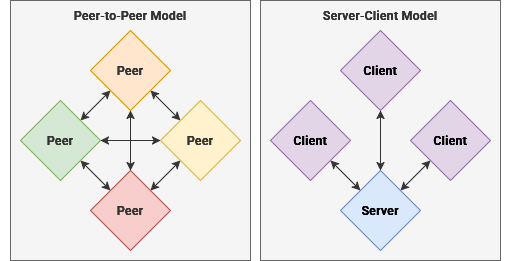
While most cloud services are based on the [client and server model](https://hub.subspace.services/books/world-wide-web/page/what-are-computer-networks "What are Computer Networks?") – where a central server responds to client applications – there are more self-hosted services exploring the concept of [federation](https://en.m.wikipedia.org/wiki/Federation_(information_technology)). Instead of a single designated server, each service instance behaves as an equal within a peer-to-peer network and communicate through a shared API language. For example, this allows your [OwnCloud](https://hub.subspace.services/books/owncloud "OwnCloud •") server to communicate and share files with a friend's [OwnCloud](https://hub.subspace.services/books/owncloud "OwnCloud •") server.
There are [so many open-source software projects](https://awesome-selfhosted.net/) available for self-hosting on the internet. Many services provide their own browser-based web applications, as well as platform-specific software such as an Android app. Some services – like [Radarr](https://hub.subspace.services/books/radarr "Radarr •") for managing a movie collection – operate as a single user environment. Many services offer true multi-user support with individually-customizable accounts. These generally come with an administrative panel for managing user access and configuring the service for them.
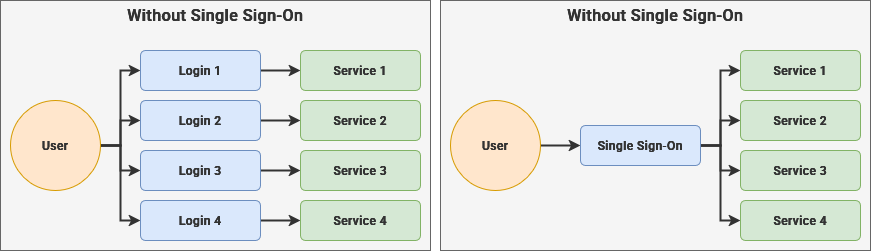
Increasingly, these disparate software packages are improving support for "[Single Sign-On](https://en.m.wikipedia.org/wiki/Single_sign-on)" services like [Authelia](https://hub.subspace.services/books/authelia "Authelia •") that offer unified user accounts across multiple self-hosted services. These services leverage open standards like [OpenID](https://openid.net/) to ensure security and privacy. Practically, this means that signing in for one service will open access to all of your self-hosted services without needing to log in again.